Pt. Jawaharlal Nehru
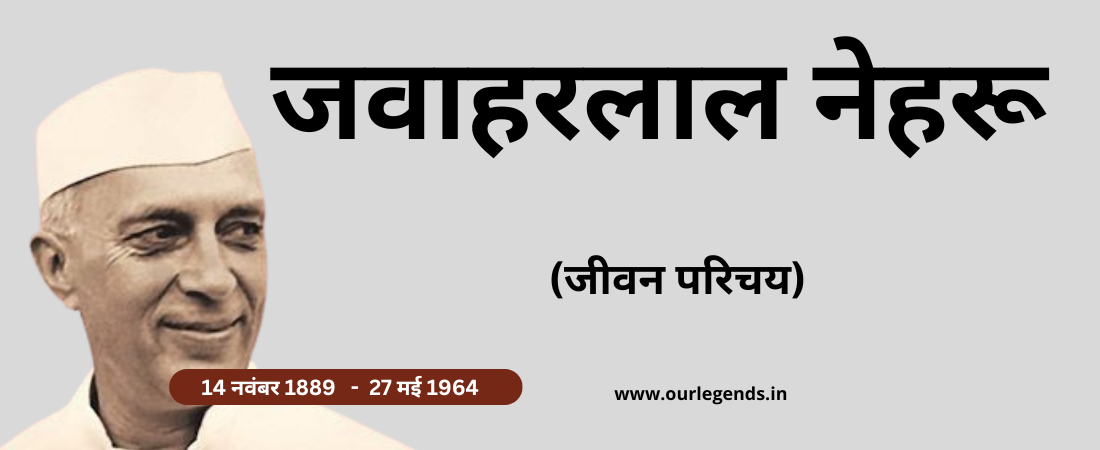
Jawaharlal Nehru became the founder of India; He also became one of the greatest and most influential leaders of the 20th century. After independence from British rule in August 1947, Nehru became the first Prime Minister of India and retained the post until his death in May 1964. A close friend and supporter of Mahatma Gandhi, Nehru also played a crucial role in leading the Indian independence movement.
The children crossed the U S.S. They adored Jawaharlal Nehru so much that they affectionately called him Chacha Nehru (grandfather).India celebrates Children’s Day on November 14 to mark his birth anniversary. Nehru’s values and vision of India are based on secularism, democracy, socialism and industrialization. Nehru’s vision for India could see the United States emerge from colonialism and transition through medical development into a prosperous, modern and self-sufficient state
Early Life and Education:
Jawaharlal Nehru was born in Allahabad, Uttar Pradesh (then called Prayagar) on 14 November. His mother Swaroop Rani Nehru, Kashmiri happens to be a very traditional and loving child of the family that had a significant influence on her upbringing. Growing up in Anand Bhavan, Jawaharlal enjoyed immense privilege and a modern, Western-style upbringing.
Private tutors and governesses provided Nehru with his initial education, but it was through his relationship with one outstanding teacher: Ferdinand T. Brooks. Mr. Brooks instilled a love of reading in Nehru and introduced him to the wonders of science. At the age of fifteen (1905), he left home to attend Harrow School in England. He graduated from Harrow and entered Trinity College, Cambridge, in 1907, majoring in Natural Sciences and graduating in 1910 with an honours degree.
After Cambridge, Nehru continued his research in London, where he went to the Inner Temple, and became a lawyer in 1912. Returning to India, he quickly grew disillusioned with legal practice and turned toward public life.
Role in India’s Freedom Struggle:
Returning to India after several years abroad, Jawaharlal Nehru joined the Allahabad High Court. Soon, however, Nehru was dragged into the maelstrom of Indian nationalist politics. A crucial second in Nehru’s political development came in 1916 when he first met Mohandas Karamchand Gandhi sometime during the Lucknow session of the Indian Parliament.
Nehru immersed himself in nationalist inspiration and traveled all over rural India to mobilize weights, abandoning his European way of existence and adopting khadi essentially supported the non cooperation movement (1920-1922) Witnessed the appalling poverty of the Indian states and the farmers met his ensure rural deuraep exporor
In the twenties, nineteen thirties, Nehru stood out because the radical Congress leader focused on engaging junior technology. In 1929, he was elected president at the important Lahore talks of the Congress, where the Congress declared its goal of Purna Swaraj (Complete Independence) by flying the tricolor flag in blatant defiance of British rule .
He actively led major campaigns like the Salt March, Civil Disobedience, and the Quit India movement. British authorities arrested him nine times during his resistance against colonial rule. During his long imprisonment, he honed his skills as a writer, writing works along with Glimpses of World History, Autobiography, Discovery of India, etc., which helped to establish him as a highbrow and literary conscience .
Role as the First Prime Minister of India:
India broke free from the shackles of colonialism on August 15, 1947. On the night of independence, Nehru made a famous speech entitled “Tryst with Destiny” to those who served on the Constituent Assembly of India and provided hope and a sense of responsibility to a new country:
Many years ago we made a tryst with destiny and now it is time to fulfil that promise; not totally or completely, but basically. At midnight when the world is asleep, India will become alive again after so many years and to be free from the colonial rule.”
As India ‘s first Prime Minister, he faced many challenges: creating a new nation, rebuilding after partition and communal violence, and combatting extreme poverty. He was deeply committed to the idea of a pluralistic and democratic nation, overseeing the drafting of India’s constitution and ensuring free and fair participation by all citizens in India’s first general elections, which were conducted using universal adult suffrage.
Economic and Educational Vision:
Advocating an economic model that combined elements of both capitalism and socialism, Nehru created five-year plans to oversee development through government investment in industry, and focused on developing heavy industry, infrastructure projects, and agriculture. Most notably, he referred to dams, steel mills, and power plants as being the ‘temples of modern India.’
In Nehru’s view, scientific and technological innovations were critical to breaking the cycle of poverty; for this reason, he created a number of institutions focused on scientific research and development, including IITs, IIMs, AIIMS, and the Indian National Committee for Space Research (INCRS), which would evolve into the Indian Space Research Organisation (ISRO).
Foreign Policy and the Non-Aligned Movement:
Nehru shaped India’s foreign policy during the intense Cold War between global superpowers. He pledged Indian neutrality and co-founded the Non-Aligned Movement alongside leaders from Yugoslavia and Egypt. This movement actively promoted decolonization and regional peace across Asia and Africa. He also introduced the Panchsheel principles to guide peaceful relations between India and China.
Family, Wife, and Daughter
The Nehru family, often referred to as the Nehru-Gandhi dynasty, played a central role in shaping 20th-century Indian history.
Motilal Nehru ====== Swarup Rani
|
JAWAHARLAL NEHRU ====== Kamala Kaul
|
Indira Nehru ====== Feroze Gandhi
|
| |
Rajiv Gandhi Sanjay Gandhi
Jawaharlal Nehru married Kamala Kaul, a young woman from a traditional Kashmiri Pandit family living in Delhi, in March 1916. Kamala was a patriotic woman who took a very active role in the freedom struggle by, for example, marching to protest British goods and organizing non-violent protests in support of the Indian independence movement. However, Kamala’s health was fragile throughout her life. She suffered from tuberculosis and died of complications from it in Switzerland at the age of 39 in 1936. Kamala’s death devastated Nehru, and he did not remarry following her death.
Kamala gave birth to their daughter, Indira Priyadarshini Nehru, in November 1917. Indira grew up in politically unstable times with a father who had a strong political worldview. While in prison, Nehru wrote a number of educational letters to Indira, which have since been published as Letters From a Father to His Daughter. Indira was later married to Feroze Gandhi and changed her name to Indira Gandhi. She followed in her father’s footsteps and became India’s first female Prime Minister and an extraordinary leader in her own right.
Jawaharlal Nehru Imprisonments:
Nehru has played an extensive role in politics for most of his life and has been arrested on multiple occasions. In total, he has been arrested by the British colonial government nine times, with a combined total of 3,259 days in prison from 1921 to 1945. Or put another way, he spent almost 9 years in jail.
Instead of regarding these times as hardships, Nehru looked upon his imprisonments as one more aspect of life disrupted by abnormal political work. The long amounts of time he spent in confinement allowed Nehru to write many of his important literary and historical books.
The Nine Imprisonments: A Timeline
First Imprisonment (Dec 1921 – Mar 1922)
Second Imprisonment (May 1922 – Jan 1923)
Third Imprisonment (Sept 1923)
Fourth Imprisonment (Apr 1930 – Oct 1930)
Fifth Imprisonment (Oct 1930 – Jan 1931)
Sixth Imprisonment (Dec 1931 – Aug 1933)
Seventh Imprisonment (Feb 1934 – Sept 1935)
Eighth Imprisonment (Oct 1940 – Dec 1941)
Ninth Imprisonment (Aug 1942 – June 1945)
Jawaharlal Nehru University (JNU)
Although it was founded several years after he died, Jawaharlal Nehru University (based in New Delhi) remains an important reminder of Nehru’s influence on education and ideals for higher learning. JNU was created by Indian Parliament through an act passed in 1969. Its purpose was to be a first-rate university for research, teaching and knowledge that would be consistent with Nehru’s belief in democracy, scientific temper, social justice, and internationalism.
JNU has a reputation for providing an environment where liberal arts, social sciences, and humanities are emphasised, as well as undertaking innovative research in life sciences and computer sciences. In keeping with Nehru’s principle of shared growth, students from geographically or socially disadvantaged areas have their admissions to JNU adjusted accordingly. The university has produced a tremendous number of leaders, scientists, diplomats, politicians, and recently, many current and past Nobel Prize winners, while maintaining its status as an active centre for critical and rigorous intellectual discussion.
Death of Nehru:
Nehru’s last couple of years as prime minister were marred by declining health and increased stress in his ability to lead the nation during this time. The most significant stress came from the border battle with China in 1962. The loss of faith and trust in diplomatic agreements with surrounding countries caused him a great deal of emotional pain.
On May 27, 1964, Jawaharlal Nehru suffered a heart attack that resulted in his death at Teen Murti Bhavan in New Delhi. There were hundreds of thousands of grieving people in attendance for his state funeral. He wanted his ashes to be scattered along the mountains and rivers of India, as a demonstration that he would always be connected to the land and its people.
Conclusion:
Jawaharlal Nehru is too much of a nation builder to be dismissed by those that regularly question his economic policy and defence tactics regarding the nation.
He did this at a time when many on the Western side of the world believed India would disintegrate and fall into disorder.
Nehru has been critically supportive of the pillars needed to build a united nation, i.e., giving a longstanding voice to parliamentary democracy, respect for civil liberties, upholding and strengthening institutions in a predominantly secular republic.
Nehru’s odyssey from privileged son to member of elite family in Allahabad to top spot in independent India demonstrates his unwavering dedication to his country in particular and his countries in general.